- +86-18576679965
- mvp@senseiot.com
- Mon - Fri 9am - 6pm


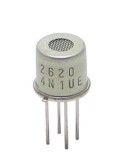
Manufacturer:: FIGARO
FIGARO TGS2620 Analog MOX Gas Sensor for Alcohol & Organic Solvent Detection
The sensitive element consists of an integrated heater and a metal oxide semiconductor structure on an alumina substrate.Okay. When a gas is detected in the air, the higher the concentration of that gas, the greater the sensor’s electrical conductivity.
The readings will also be higher. By using simple circuits, the changes in electrical conductivity can be converted into information about the gas in question.Signal output corresponding to the concentration.The TGS2620 is highly sensitive to organic solvents and other volatile gases. It is suitable for use.For use with organic solvent gas detectors. Due to the small size of the sensitive element, the TGS2620 requires heating.The device’s current requirement is only 42mA, and the housing features a standard TO-5 metal package.
| Detection Principle | Oxide semiconductor type |
| Target Gases | Ethanol, organic solvents |
| Detection Range | Ethanol 50 ~ 5000ppm |
| Heater Voltage (VH) | 5.0±0.2V AC/DC |
| Circuit Voltage (VC) | 5.0±0.2V DC, Ps≤15mW |
| Load Resistance (RL) | Variable, 0.45kΩ min. |
| Heater Resistance (RH) | Approx. 83Ω at room temperature |
| Heater Current (IH) | 42±4mA |
| Heater Power Consumption (PH) | Approx. 210mW |
| Sensor Resistance (RS) | 1 ~ 5kΩ in 300ppm ethanol |
| Sensitivity (Change Rate of RS) | 0.3~0.5 (RS at 300ppm / RS at 50ppm ethanol) |
| Test Gas Condition | Alcohol vapor in air, 20±2˚C, 65±5%R.H. |
| Circuit Condition | Vc = 5.0±0.01V DC, VH = 5.0±0.05V DC |
To learn more, please download the PDF.
